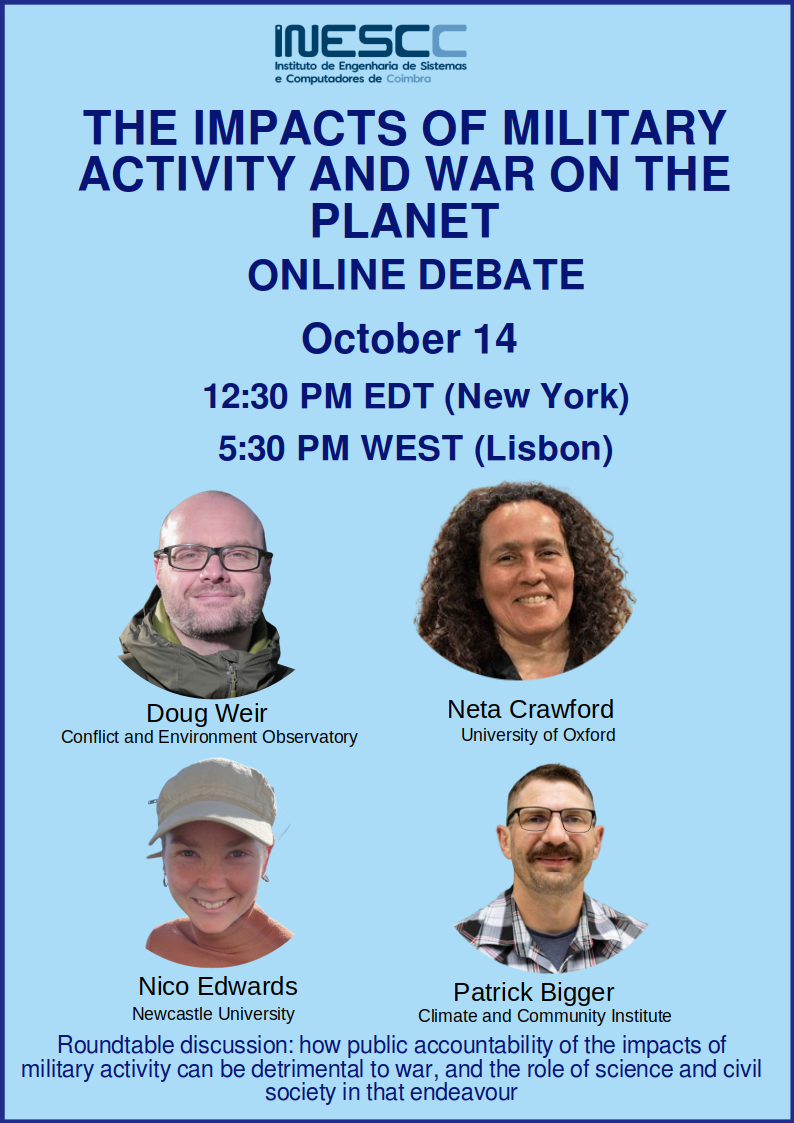
𝗢𝗻𝗹𝗶𝗻𝗲 𝗱𝗲𝗯𝗮𝘁𝗲, 𝟭𝟰 𝗢𝗰𝘁𝗼𝗯𝗲𝗿 𝟮𝟬𝟮𝟲
𝟭𝟮:𝟯𝟬 𝗣𝗠 𝗘𝗗𝗧 (𝗡𝗲𝘄 𝗬𝗼𝗿𝗸)
𝟱:𝟯𝟬 𝗣𝗠 𝗪𝗘𝗦𝗧 (𝗟𝗶𝘀𝗯𝗼𝗻)
GHG emissions from military activity and war are largely kept secret. Neither the Kyoto Protocol nor the Paris Agreement mandated transparency or accountability for them. However, the impacts of warfare extend far beyond emissions: They include the destruction of infrastructure, forest fires, displacement of populations, irreversible ecosystem damage, and the disruption of previous land use, in addition to the upstream impacts of industry and logistics.
Science can uncover these impacts, raise public awareness, and increase pressure on policymakers.
The roundtable, organised by INESC Coimbra, gathers specialists with different approaches and scopes, providing a multidisciplinary view of the planetary problems created by warfare.
🗓️ October 14 | 💻 Online🔗 Register here: https://bit.ly/4xkYB9Y